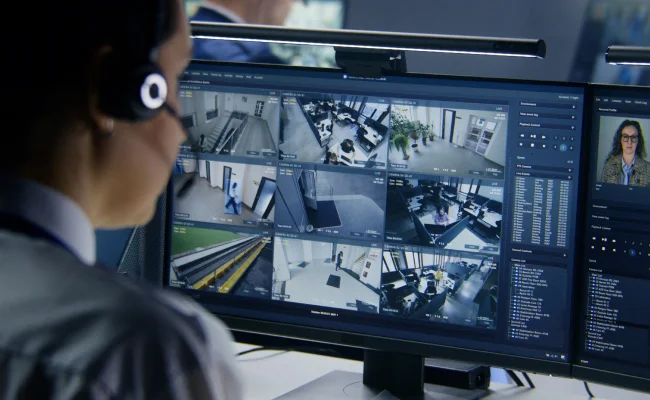
Every Egyptian operation — the bank branch, the retail chain, the factory, the hospital — carries a camera budget line. It is treated as insurance: a sunk cost renewed annually against incidents that may occur. Finance never asks of this line the question it asks of every other investment: what is the payback period.
The analytics layer changes the category of the line. It runs on the camera infrastructure already depreciated on the books, and it produces returns along four measurable streams. This article presents the calculation model — with every input auditable against the figures of the organization itself.
The Four Return Streams
Each stream below is documented in a dedicated analysis in this blog, and each maps to a loss line the organization is already carrying today.
| The return stream | What it recovers | Documented in |
|---|---|---|
| Payroll recovery | Paid attendance hours with no presence behind them | The hidden cost of attendance fraud |
| Conversion recovery | Layout-driven purchase uplift, branch by branch | Retail heatmap analysis |
| Incident avoidance | Line stoppage, investigation, premiums and inspection exposure | AI PPE compliance for factories |
| Protected service revenue | Queue abandonment recovered at branch level | Smart queue management in banks |
A Payback Model for a Mid-Size Egyptian Operation
The model applies deliberately conservative inputs to an operation of ten branches and six hundred employees. Each figure is replaceable with the actual numbers of the organization.
| The line | The annual figure |
|---|---|
| Payroll line — 5% of staff, 10 borrowed minutes per shift | 93,000 EGP |
| Conversion line — layout corrections at chain level | 400,000 EGP |
| Incident line — one avoided incident per year | 200,000 EGP |
| Service line — queue abandonment, single branch | 384,000 EGP |
| Total measured annual return | 1,077,000 EGP |
| Annual layer investment — deployment and licensing | 600,000 EGP |
| Payback period | Under 7 months |
Each line maps to a calculation model detailed in the articles above. When an organization replaces the assumptions with its own figures, the model becomes its own business case — built on its payroll scale, its basket value, its incident history and its branch traffic.
Why the Model Holds in the Egyptian Market
- Input transparency: salary levels, rent per square meter and service revenue per visit are verifiable in EGP — the model requires no imported benchmarks and no currency assumptions.
- The infrastructure is already depreciated: the camera network sits on the books; the incremental investment is the layer alone — the marginal cost structure works in the model favor.
- Cost lines inflate annually: under prevailing cost conditions, each loss line grows every year while the investment line is fixed — the payback period shortens over time rather than lengthening.
- The returns are events, not estimates: the streams are built from documented records — attendance events, conversion counts, alerts and timestamps — which makes the business case auditable after deployment, not only before it.
What the Finance Review Should Ask
- Which of the four loss lines does the organization actually carry — payroll leakage, conversion loss, incident exposure or service abandonment?
- What measures those lines today, and at what reporting delay?
- What share of the existing camera network can carry the layer without new hardware?
- What verification path confirms each return line before it enters the business case?
One Layer, Four Sectors
The same model structure governs deployments across sectors — banking measured it in queue management, retail in conversion analytics, industry in safety compliance and healthcare in patient safety. The common architecture is documented in how existing cameras become a business intelligence source — one layer, running on the network the organization already owns.
ARMANET delivers that layer from inside the Egyptian market: configuration, Arabic reporting and support by teams across Cairo, Alexandria and the Delta, with strategic partnerships with Vodafone and Etisalat Misr behind the connectivity backbone.
A camera that records documents losses after they occur. A camera layer that acts returns them while they occur. The difference between the two is the difference between a cost line and an investment line.
Where to Start
The entry point is one quarter of the data of the organization: attendance records, branch traffic, incident log, service volumes. In one working session, the ARMANET team in Egypt maps each line onto the model above — and produces the business case on the figures of the organization, not on ours.
Book a demo with ARMANET and give the camera budget line the review it has never had.